


1. How Are Fiber Optic Cables Revolutionizing Modern Broadcast Operations?
Struggling with signal degradation or interference in your broadcast setup? Facing limitations with bandwidth for high-resolution content? Fiber optic cables deliver the clarity and capacity you need.
Fiber optic cables are revolutionizing broadcast by providing massive bandwidth for 4K/8K video, immunity to electromagnetic interference for pristine signals, and robust reliability for live events and studio productions, transforming content quality and workflow efficiency.
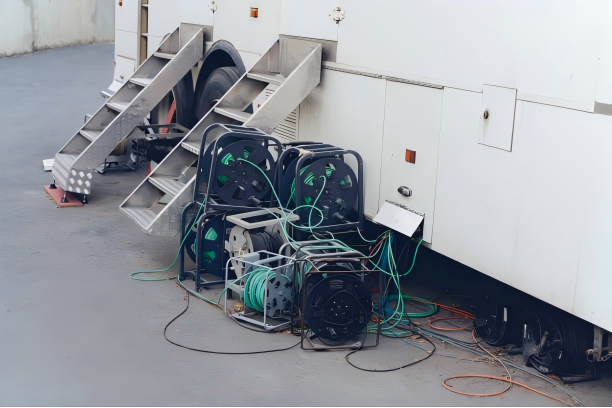
Throughout my career in fiber optic cable manufacturing, I've witnessed how this technology has fundamentally changed industries. The broadcast world, with its constant push for higher quality and more immersive experiences, is a perfect example. I've seen firsthand how upgrading to fiber optics has solved critical challenges for broadcasters, enabling them to deliver content that was previously unimaginable. Let's delve into how these remarkable cables are making a difference.
2. Why is High Bandwidth Fiber Essential for Today's Broadcast Demands?
Are you finding that traditional copper cables can't keep up with 4K, 8K, or high frame rate video? Experiencing bottlenecks in your production workflow? Fiber optics offer the bandwidth solution.
High bandwidth fiber is essential for today's broadcast demands because it effortlessly handles the massive data rates of uncompressed high-resolution video and audio, ensuring pristine signal quality and future-proofing for emerging formats.
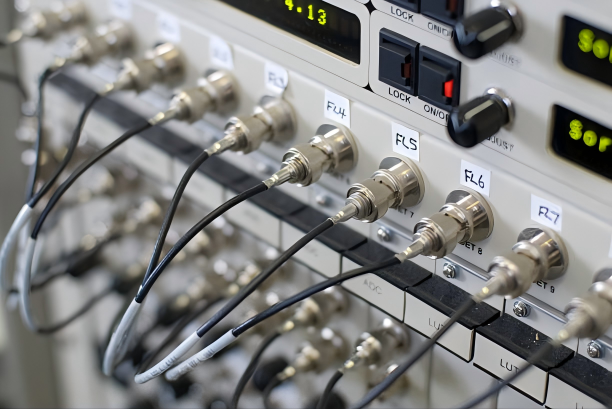
I often talk to broadcast engineers who are grappling with the explosion in data generated by modern production. Think about an 8K HDR signal – the amount of information is staggering. Trying to push that through older cabling systems is like trying to fit an ocean through a garden hose. It just doesn't work without significant compromises. Our fiber optic solutions are designed precisely for these high-demand scenarios, providing a superhighway for broadcast signals.
2.1 Meeting the Data Challenge of Modern Video Formats
The quest for higher resolution, dynamic range, and frame rates in broadcasting puts immense pressure on the underlying signal transport technology. Fiber optics are uniquely positioned to handle this.
- Uncompressed Video Transmission: To achieve the highest possible quality, broadcasters often prefer to work with uncompressed video signals, especially in production and post-production. These signals, particularly for 4K, 8K, and beyond, require enormous bandwidth. For instance, a single uncompressed 4K UHD signal at 60 frames per second can require around 12 Gigabits per second (Gbps). 8K can quadruple that. Fiber optics can handle these data rates with ease over significant distances.
- High Dynamic Range (HDR) and Wide Color Gamut (WCG): HDR and WCG add more data to the video signal, further increasing bandwidth needs. Fiber ensures that these rich visual details are preserved from camera to screen.
- High Frame Rate (HFR): For sports and action content, HFR (e.g., 120fps or higher) provides smoother motion but also doubles or quadruples the data. Fiber's capacity readily accommodates this.
- IP-Based Workflows: The broadcast industry is increasingly moving towards IP-based infrastructure (SMPTE ST 2110). These workflows rely on high-capacity networks to transport video, audio, and data as separate streams. Fiber optics provide the reliable, high-bandwidth backbone essential for these complex IP environments.
Consider the bandwidth requirements:
| Video Format | Typical Uncompressed Bitrate | Fiber Optic Advantage |
|---|---|---|
| HD (1080p60) | ~3 Gbps | Easily handled, allows for multiple streams. |
| 4K UHD (2160p60) | ~12 Gbps | Essential for uncompressed 4K production. |
| 8K UHD (4320p60) | ~48 Gbps | Future-proof solution, handles extreme data loads. |
| IP Video (ST 2110) | Variable, very high aggregate | Scalable and robust for complex multi-stream IP traffic. |
When a major sports broadcaster client of ours decided to cover an international championship entirely in 8K, their existing infrastructure was pushed to its limits. We worked with them to implement a comprehensive fiber optic backbone. The result was a flawless, stunning broadcast that set a new standard. That's the power of having enough bandwidth.
3. How Do Fiber Optics Ensure Signal Purity in Noisy Broadcast Environments?
Is electromagnetic interference (EMI) from lighting rigs or power cables degrading your audio and video signals? Experiencing signal loss over long cable runs in large venues? Fiber optics provide a clear advantage.
Fiber optics ensure signal purity by being completely immune to electromagnetic and radio frequency interference (EMI/RFI). They also transmit signals over vast distances with negligible loss, delivering pristine audio and video.
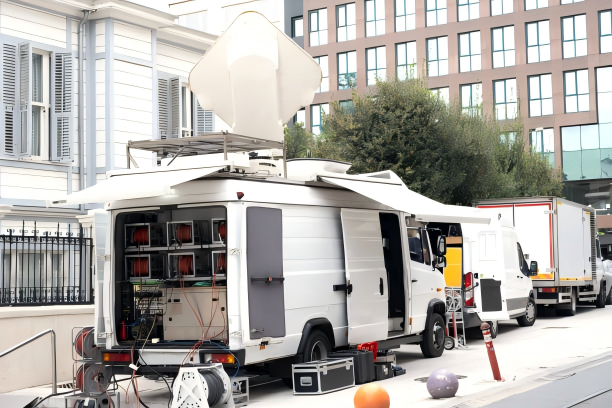
I've been in many broadcast environments, from bustling studios filled with electronic equipment to massive outdoor concert venues with powerful lighting and sound systems. These places are often saturated with potential sources of interference that can wreak havoc on copper-based signals. One of the most celebrated qualities of the fiber optic cables we manufacture is their natural immunity to all this electrical noise. It’s a fundamental problem solver for broadcasters.
3.1 Maintaining Signal Integrity Against All Odds
In broadcasting, signal integrity is paramount. Any degradation can impact the viewer's experience and the broadcaster's reputation.
- Immunity to EMI/RFI: Fiber optic cables transmit data using light pulses, not electrical currents. This makes them completely impervious to electromagnetic interference from sources like power cables, lighting dimmers, motors, and RF transmitters (like wireless mics or communication systems). This is a massive advantage in studios, OB vans, and live event venues where such interference is common. I remember visiting a studio where they constantly battled hum and noise on their audio lines until they switched their main audio snakes to fiber. The difference was immediate and dramatic.
- Elimination of Ground Loops: Because fiber is dielectric (non-conductive), it eliminates the ground loop problems that can plague audio and video systems connected with copper cables, especially when equipment is powered from different electrical sources.
- Low Signal Attenuation: Optical signals lose very little strength as they travel through a fiber cable, even over kilometers. This contrasts sharply with copper cables, where signal loss (attenuation) increases significantly with distance and frequency, requiring amplifiers or equalizers that can introduce their own noise or distortion. This makes fiber ideal for connecting cameras and microphones far from the production truck or control room.
Let's look at these critical factors:
| Challenge in Broadcast | Copper Cable Response | Fiber Optic Solution |
|---|---|---|
| EMI/RFI | Susceptible, requires shielding, can still pick up noise. | Immune, light signals are unaffected. |
| Ground Loops | Potential for hum and interference. | Eliminated, as fiber is non-conductive. |
| Signal Attenuation | Significant loss over distance, especially at high frequencies. | Very low loss, enabling long-distance transmission. |
| Cable Weight/Size | Can be bulky and heavy for high channel counts. | Lighter and smaller diameter for similar or higher capacity. |
The ability to deliver a clean, strong signal regardless of the electrical environment or distance is why fiber optics have become the gold standard for critical broadcast applications.
4. What Specialized Fiber Optic Cables Are Tailored for Demanding Broadcast Use?
Need rugged, deployable cables for outside broadcasts? Looking for hybrid cables that can carry power and signal to cameras? Specialized fiber solutions are designed for the unique rigors of broadcasting.
Specialized fiber optic cables for broadcast include robust tactical fiber for field deployment, SMPTE hybrid cables combining power and optical fibers for cameras, and multi-channel breakout assemblies for efficient, high-density connections.
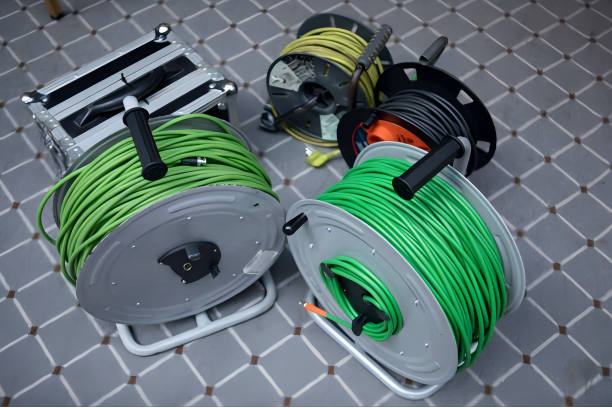
At MoldAll, we understand that not all fiber optic cables are created equal, especially when it comes to the demanding world of broadcast. A cable used in a climate-controlled data center is very different from one that needs to be repeatedly deployed in harsh outdoor conditions for a live sports event. We've engineered specific cable solutions to meet the unique physical and operational requirements of broadcasters.
4.1 Cables Built for the Realities of Production
Broadcast applications often require cables that are not only high-performing but also incredibly durable and easy to use.
- Tactical Fiber Optic Cables: These are designed for repeated field deployment and retrieval. They feature crush-resistant and abrasion-resistant jacketing, high flexibility even in cold temperatures, and often come on portable reels. They are built to withstand being stepped on, driven over (by light vehicles), and exposed to the elements. I've seen our tactical cables survive conditions that would destroy standard cables.
- SMPTE Hybrid Cables (e.g., SMPTE 304M/311M): These are a mainstay for professional broadcast cameras. They cleverly combine optical fibers (for video, audio, control signals) with copper conductors (for powering the camera and auxiliary devices) in a single, robust cable. This simplifies camera setup by reducing the number of cables needed.
- Breakout and Trunk Cables: For studio infrastructure or connecting OB vans, multi-fiber trunk cables with breakout assemblies are common. These consolidate many optical channels into a single robust cable, which then "breaks out" into individual connectors at each end. This improves organization and reduces setup time.
- Specialized Connectors: The broadcast industry often uses robust connectors designed for quick and reliable mating/demating cycles, even in dirty environments. Examples include LEMO 3K.93C series, Neutrik opticalCON, and Delphi (TAC). These are far more rugged than typical datacom connectors.
Here's how they fit in:
| Cable Type | Key Features | Common Broadcast Applications |
|---|---|---|
| Tactical Fiber | Rugged, flexible, deployable, high crush/impact resistance. | Outside broadcast (OB), live events, field production. |
| SMPTE Hybrid Cable | Combines optical fibers and copper power conductors. | Connecting professional broadcast cameras to CCUs. |
| Multi-Fiber Trunks | High fiber count in a single jacket, often with breakout legs. | Studio infrastructure, OB van interconnects, high-density patching. |
| Pre-Terminated Assemblies | Factory-terminated and tested, ready for plug-and-play. | Rapid deployment, permanent installations, critical links. |
Choosing the right specialized cable is vital for ensuring reliability and longevity in the fast-paced, often challenging, broadcast environment. It's about having gear you can trust when the "On Air" light comes on.
5. Conclusion
Fiber optic cables are indispensable for modern broadcasting, delivering unparalleled bandwidth, signal integrity, and reliability, thus empowering higher quality productions and more efficient workflows.
